Sustainable water infrastructure: Balancing growth and renewal in Australia’s water sector
December 11, 2025
Select your region to visit a Stantec regional site, or visit our Locations Hub on our Global site where you can learn more about Stantec in your local area.
", "languageSelectorImage": { "imageLarge": "\/content\/dam\/stantec\/images\/Icons\/Map.svg" }, "globalRegion": { "name": "Global", "regionTag": "localization:global", "description": "", "languages": [ { "langCode": "en", "name": "English", "pathLink": { "url": "en" }, "active": "true" }, { "langCode": "fr", "name": "Français", "pathLink": { "url": "fr" }, "active": "false" } ] }, "regionLanguages": [ { "regionTag": "localization:china", "name": "China", "description": "", "languages": [ { "langCode": "en", "name": "English", "pathLink": { "url": "cn" }, "active": "false" }, { "langCode": "en", "name": "", "pathLink": { "url": "en" }, "active": "false" } ] }, { "regionTag": "localization:italy", "name": "Italy", "description": "", "languages": [ { "langCode": "it", "name": "Italiano", "pathLink": { "url": "it" }, "active": "false" }, { "langCode": "en", "name": "", "pathLink": { "url": "en" }, "active": "false" } ] }, { "regionTag": "localization:latin\u002Damerica", "name": "Latin America", "description": "", "languages": [ { "langCode": "es", "name": "Español", "pathLink": { "url": "es" }, "active": "false" }, { "langCode": "en", "name": "", "pathLink": { "url": "en" }, "active": "false" } ] }, { "regionTag": "localization:netherlands", "name": "Netherlands", "description": "", "languages": [ { "langCode": "nl", "name": "Nederlands", "pathLink": { "url": "nl" }, "active": "false" }, { "langCode": "en", "name": "", "pathLink": { "url": "en" }, "active": "false" } ] }, { "regionTag": "localization:taiwan", "name": "Taiwan", "description": "", "languages": [ { "langCode": "zh_tw", "name": "繁體中文", "pathLink": { "url": "zh_tw" }, "active": "false" }, { "langCode": "en", "name": "", "pathLink": { "url": "en" }, "active": "false" } ] }, { "regionTag": "localization:turkey", "name": "Turkiye", "description": "", "languages": [ { "langCode": "tr", "name": "Türkçe", "pathLink": { "url": "tr" }, "active": "false" }, { "langCode": "en", "name": "", "pathLink": { "url": "en" }, "active": "false" } ] } ], "originPath": "/content/stantec/au/ideas/content/blog/2025/sustainable-water-infrastructure-balancing-growth-renewal-australias-water-sector.html" }, "locationSelector": { "locationInformationText": "We\x27ve detected you are located in", "locationDropdownText": "Please select your location", "changeLocationText": " Change location", "locationSaveText": " Save location", "learnMoreText": "Learn how we use this information", "regions": [ { "tag": { "tagID": "localization:africa" }, "title": "Africa" }, { "tag": { "tagID": "localization:australia" }, "title": "Australia" }, { "tag": { "tagID": "localization:belgium" }, "title": "Belgium" }, { "tag": { "tagID": "localization:caribbean" }, "title": "Caribbean" }, { "tag": { "tagID": "localization:china" }, "title": "China" }, { "tag": { "tagID": "localization:czech\u002Drepublic" }, "title": "Czech Republic" }, { "tag": { "tagID": "localization:germany" }, "title": "Germany" }, { "tag": { "tagID": "localization:global" }, "title": "Global" }, { "tag": { "tagID": "localization:india" }, "title": "India" }, { "tag": { "tagID": "localization:italy" }, "title": "Italy" }, { "tag": { "tagID": "localization:latin\u002Damerica" }, "title": "Latin America" }, { "tag": { "tagID": "localization:middle\u002Deast" }, "title": "Middle East" }, { "tag": { "tagID": "localization:netherlands" }, "title": "Netherlands" }, { "tag": { "tagID": "localization:new\u002Dzealand" }, "title": "New Zealand" }, { "tag": { "tagID": "localization:north\u002Damerica" }, "title": "North America" }, { "tag": { "tagID": "localization:slovakia" }, "title": "Slovakia" }, { "tag": { "tagID": "localization:taiwan" }, "title": "Taiwan" }, { "tag": { "tagID": "localization:turkey" }, "title": "Turkiye" }, { "tag": { "tagID": "localization:united\u002Dkingdom" }, "title": "United Kingdom" } ], "currentRegion": "Global", "learnMoreLink": { "url": "\/au\/copyright.html", "target": "" } }, "searchBar": { "searchPageLink": { "url": "\/au\/search.html" }, "labels": { "searchInputLabel": "Search Input", "searchBarPlaceholder": "What are you looking for?", "closeButton": "Close Button", "suggestionsFooter": "Search for results", "noSuggestions": "No suggestions found" }, "searchBarSuggestions": { "endpoint": "/bin/suggestions.json", "currentPath": "\/content\/stantec\/au\/ideas\/content\/blog\/2025\/sustainable\u002Dwater\u002Dinfrastructure\u002Dbalancing\u002Dgrowth\u002Drenewal\u002Daustralias\u002Dwater\u002Dsector" } }, "languageSelectorModal": { "languageSelectorTitle": "Language \/ Region", "languageSelectorDescription": "Select your region to visit a Stantec regional site, or visit our Locations Hub on our Global site where you can learn more about Stantec in your local area.
", "languageSelectorImage": { "imageLarge": "\/content\/dam\/stantec\/images\/Icons\/Map.svg", "altText": " World map" }, "globalRegion": { "name": "Global", "regionTag": "localization:global", "description": "", "languages": [ { "langCode": "en", "name": "English", "pathLink": { "url": "en" }, "active": "true" }, { "langCode": "fr", "name": "Français", "pathLink": { "url": "fr" }, "active": "false" } ] }, "regionLanguages": [ { "regionTag": "localization:china", "name": "China", "description": "", "languages": [ { "langCode": "en", "name": "English", "pathLink": { "url": "cn" }, "active": "false" }, { "langCode": "en", "name": "", "pathLink": { "url": "en" }, "active": "false" } ] }, { "regionTag": "localization:italy", "name": "Italy", "description": "", "languages": [ { "langCode": "it", "name": "Italiano", "pathLink": { "url": "it" }, "active": "false" }, { "langCode": "en", "name": "", "pathLink": { "url": "en" }, "active": "false" } ] }, { "regionTag": "localization:latin\u002Damerica", "name": "Latin America", "description": "", "languages": [ { "langCode": "es", "name": "Español", "pathLink": { "url": "es" }, "active": "false" }, { "langCode": "en", "name": "", "pathLink": { "url": "en" }, "active": "false" } ] }, { "regionTag": "localization:netherlands", "name": "Netherlands", "description": "", "languages": [ { "langCode": "nl", "name": "Nederlands", "pathLink": { "url": "nl" }, "active": "false" }, { "langCode": "en", "name": "", "pathLink": { "url": "en" }, "active": "false" } ] }, { "regionTag": "localization:taiwan", "name": "Taiwan", "description": "", "languages": [ { "langCode": "zh_tw", "name": "繁體中文", "pathLink": { "url": "zh_tw" }, "active": "false" }, { "langCode": "en", "name": "", "pathLink": { "url": "en" }, "active": "false" } ] }, { "regionTag": "localization:turkey", "name": "Turkiye", "description": "", "languages": [ { "langCode": "tr", "name": "Türkçe", "pathLink": { "url": "tr" }, "active": "false" }, { "langCode": "en", "name": "", "pathLink": { "url": "en" }, "active": "false" } ] } ], "originPath": "/content/stantec/au/ideas/content/blog/2025/sustainable-water-infrastructure-balancing-growth-renewal-australias-water-sector.html" } }December 11, 2025
Integrated planning, sustainable water infrastructure, and smart technology solutions are essential
Australia’s water sector is under more pressure than ever. And, as our population grows, it’s only going to get worse.
We need to build sustainable water infrastructure to support our growing communities. But at the same time, many existing assets are aging—and repairs are taking a back seat.
Balancing growth and renewal in water utilities is a challenge for our councils. It’s also a risk to our future. It’s predicted that Australia will reach 30 million people by 2030. Our water infrastructure must keep up.
New infrastructure gets more attention—and more funding. It’s easier to cut a ribbon at a new plant than to upgrade aging pipes. But this mindset can create bigger problems. When we focus only on new projects, we ignore integrated infrastructure and service outcomes. That leads to system failures and rising costs over time.
It’s time to explore what’s stopping us from investing in sustainable water infrastructure in Australia—and how we can fix it.
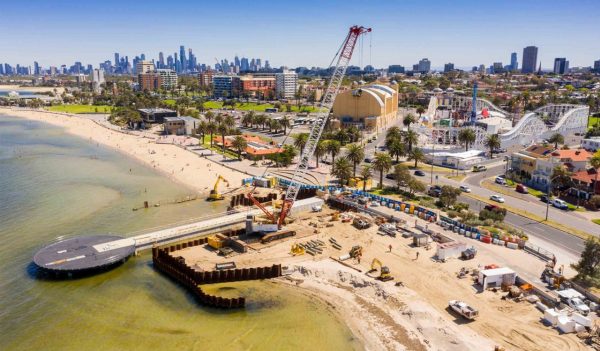
More than a drain, Shakespeare Grove creates a striking destination while managing stormwater in St Kilda.
When spending on new water infrastructure in Australia goes up, interest repayments also increase. This eats into budgets for ongoing maintenance.
Add workforce shortages to the mix, and utilities struggle—both to deliver new projects and to keep existing water assets running.
We see this across the country. Many regional councils aren’t focused on advanced treatment technologies and systems. Instead, they prioritise reliable day-to-day operations. But they face a funding gap. External grants often favour new infrastructure over essential maintenance.
Technology can help—but it’s not a silver bullet. Many water utilities providers are data rich but information poor. They have sensors and systems producing large volumes of data. But without asset and system integration, it’s hard to turn that data into action.
Without quality insights, water utilities can’t plan renewals or target their limited budgets wisely.
Water investment decisions need to rise above politics. The focus must be on building sustainable water infrastructure—guided by evidence, not expediency.
What’s the best path forward? Taking an integrated approach to asset management in the water sector.
This treats growth and renewal as equal contributors—not competitors—to asset performance and service health. It looks at the full life of Australia’s water infrastructure—not just today’s needs.
We don’t need to reinvent the wheel. We need to connect what’s already in place. That means breaking down silos, aligning data systems, and making investment decisions based on whole-of-system thinking. When we plan new infrastructure, we consider how it fits with existing assets. When we plan renewals, we think about future growth and what communities will need.
Sustainable water infrastructure should also solve more than one problem. Constructed wetlands clean wastewater and create environmental value. In Melbourne, a sewer outfall was turned into a pier and jetty.
These projects show how infrastructure can do more than deliver services. They improve communities. And this approach is transforming how utilities make every investment decision.
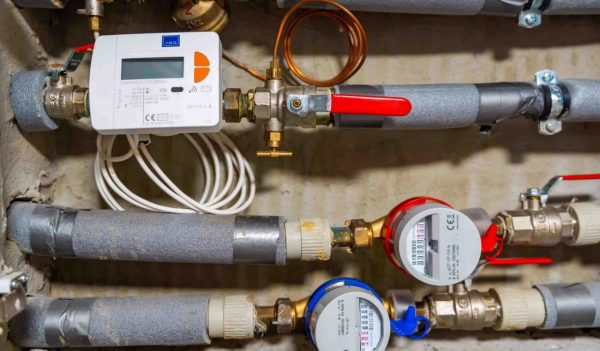
A smart meter is one tool that can help utilities to monitor water usage in real time for better performance and maintenance planning.
Utilities must optimise performance and plan maintenance for more sustainable water infrastructure. These are some tools to help:
One of our clients was facing a costly upgrade—hundreds of millions for a new water treatment plant. So, they invested in smart water meters instead.
At the time, our client was using water at 2.5 times the national average. Through targeted education and demand programs, they reduced usage and delayed the need for a new plant by 20 to 30 years.
Across the Tasman, others have adopted the Esri Utility Network Data Model. This digital platform maps every component of a water system in real time—both above and below ground. It includes pipes, valves, tanks, pump stations, and reservoirs—as well as roads, buildings, and natural features.
With this system, operators can instantly locate assets and access key data. For example, they can see the age and condition of a stormwater pipe, its service schedule, and its flow path.
Tools like the Esri Utility Network help water utility providers to prioritise the investments that matter most. That means fewer failures—and better planning for growth.
Water investment decisions need to rise above politics. The focus must be on building sustainable water infrastructure—guided by evidence, not expediency. When we plan for long-term resilience, the case for integrated infrastructure planning is clear. It’s smarter, more cost-effective, and better for communities.
The future of Australia’s water sector is collaborative.
Industry. Government. And communities come together to solve shared challenges. Integrated planning enables sustainable water infrastructure that meets both today’s demands and tomorrow’s unknowns.
A sustainable future for Australia’s water utilities doesn’t mean choosing between growth and renewal—it’s about balancing both. With the right tools, thinking, and partnerships, we can deliver sustainable water infrastructure that’s ready for whatever comes next.
