Insight-led thinking: Bringing the industry together to deliver new towns in England
December 05, 2025
December 05, 2025
Stantec launched its new report looking at the public’s perception of new towns. And then we gathered influential leaders to talk about it.
When you think about new towns in England and the wider UK, what comes to mind? Our latest report—New Towns: Creating Communities, Building Trust—uncovered the views of thousands of people across the country. We wanted to know what they really think about new towns. And what the development industry needs to do to boost their appeal.
Our report, based on exclusive YouGov research, reveals that just one in four people find the idea of moving to a new town appealing, while two in three find the concept unappealing. There is a large gap between a public that aren’t engaged and a chronic, national need for housing. When asked what a ‘new town’ means, most picture a soulless, poor-quality housing estate, not the thriving, connected communities we aspire to create.
Yet, people recognise the need for more housing and understand the rationale behind new towns in England and the New Towns Programme. Our challenge is to inspire minds and shift perceptions, showing that visionary, quality places with community and soul are possible.
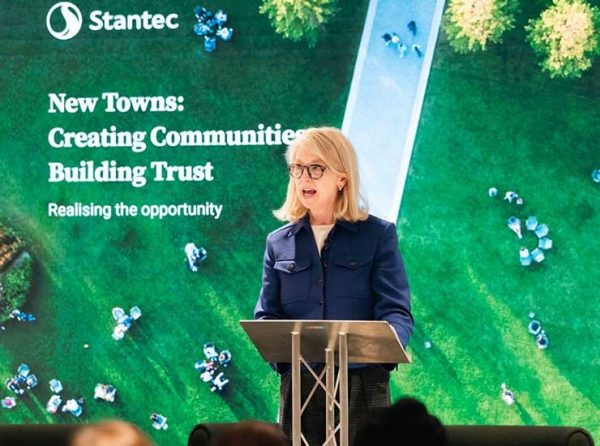
At the launch event for the New Towns: Creating Communities, Building Trust report, Nancy MacDonald stressed the need for collective and evidence-led thinking to create better new towns in England.
For our teams, creating new towns is our lived experience. We’ve been creating them for years. Examples include
Our teams have shaped communities from the ground up for decades, both in the United Kingdom and globally. We’ve tackled everything from site identification to infrastructure, utilities, and environmental design.
The goal is to deliver new towns in England efficiently and with the communities’ best interests at heart. We understand the challenges, the scrutiny, and the immense responsibility that comes along with it.
Success depends on collaboration between government, developers, and the communities. That’s why we’re bringing together our experience and vision, so new towns become places people are proud to call home.
With this in mind, I had the pleasure of bringing industry leaders together for the launch of our report. Together, we discussed the urgent need to rethink how we deliver new towns in England and the wider UK.
It was against a backdrop of public scepticism and urgency outlined in our report that Sir Michael Lyons, Chair of the New Towns Taskforce, delivered his keynote address to our audience. His speech was both sobering and galvanising. He emphasised that the UK’s housing shortage is a major barrier to economic growth. It affects recruitment, education, health outcomes, and family formation. He highlighted the growing number of young adults living with parents, describing it as a breach of the social contract and a driver of disillusionment.
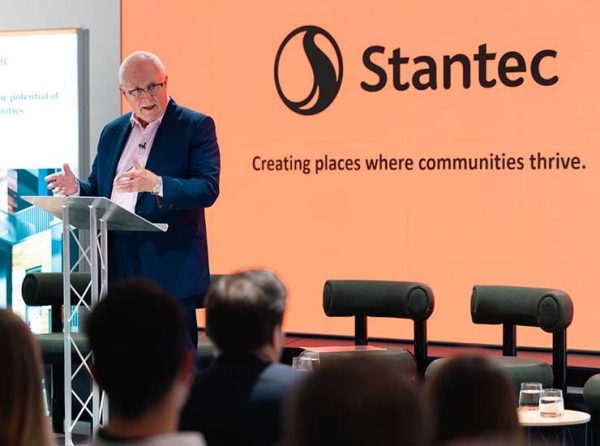
Sir Michael Lyons, chair of the New Towns Taskforce, delivered a keynote speech at the event. He said of the housing challenges: “This is a crisis of our own making, and it can be resolved.”
This was one thing Sir Michael emphasised: “This is a crisis of our own making, and it can be resolved, but it needs a big calibre response and strong, sustained leadership from government.”
He reinforced the New Town Taskforce’s mandate, which was established by the UK government soon after its election: to identify locations for new towns of at least 10,000 homes, with a focus on areas where housing shortages are limiting economic growth. He noted that the government has welcomed the report, selecting 3 of the 12 recommended locations for new towns in England for early attention. Crucially, he stressed the importance of the 10 placemaking principles outlined in the New Town Taskforce’s report. He highlighted their alignment with our report’s recommendations.
“The economically successful and attractive places of 30 years’ time will be those that reflect all 10 placemaking principles, not those that have chosen to move on 3 or 4 and forgotten the rest,” he warned. Sir Michael urged industry professionals to champion new towns in England, accelerate planning, and win public support to prevent young talent from leaving the UK.
He also called for a shift away from slow, incremental development and the heavy reliance on volume housebuilders. He also challenged the idea that home ownership is the only solution. “The prize is faster economic growth and more homes in attractive, thriving communities.”
Listening to Sir Michael’s address around new towns in England, I was struck by both the scale of the challenge and the clarity of the path forward. His words underscored what many of us in the industry already feel. This is a test of our collective ambition and resolve.
Reflecting on the immense opportunity before us, now is the time to change perceptions, set new standards for new towns in England and the UK, and improve the lives of tens of thousands of people.
The evening’s energy was amplified by a lively panel. It featured some of the most influential voices shaping the future of planning, housing, and infrastructure. Included were:
Their conversation was rich with practical wisdom, candid reflections, and bold ideas for the next generation of new towns in England. Here are my top takeaways.
1. Public perception and identity are important
The panel shared insights on the challenge of transforming the image of new towns. Alex Trott spoke about designing places that foster ‘moments of exchange’—social, cultural, and commercial interactions that help communities grow and thrive.
Caroline Foster emphasised the need to deliver amenities like schools and green spaces from the outset. That’s a lesson learned from past mistakes. It makes new towns feel welcoming and vibrant from day one.
2. Sell benefits, not features
Peter Marland challenged the industry to rethink its messaging, urging a shift from abstract concepts to tangible benefits. He argued that what truly matters to people is connectivity, opportunity, and access to the essentials of daily life.

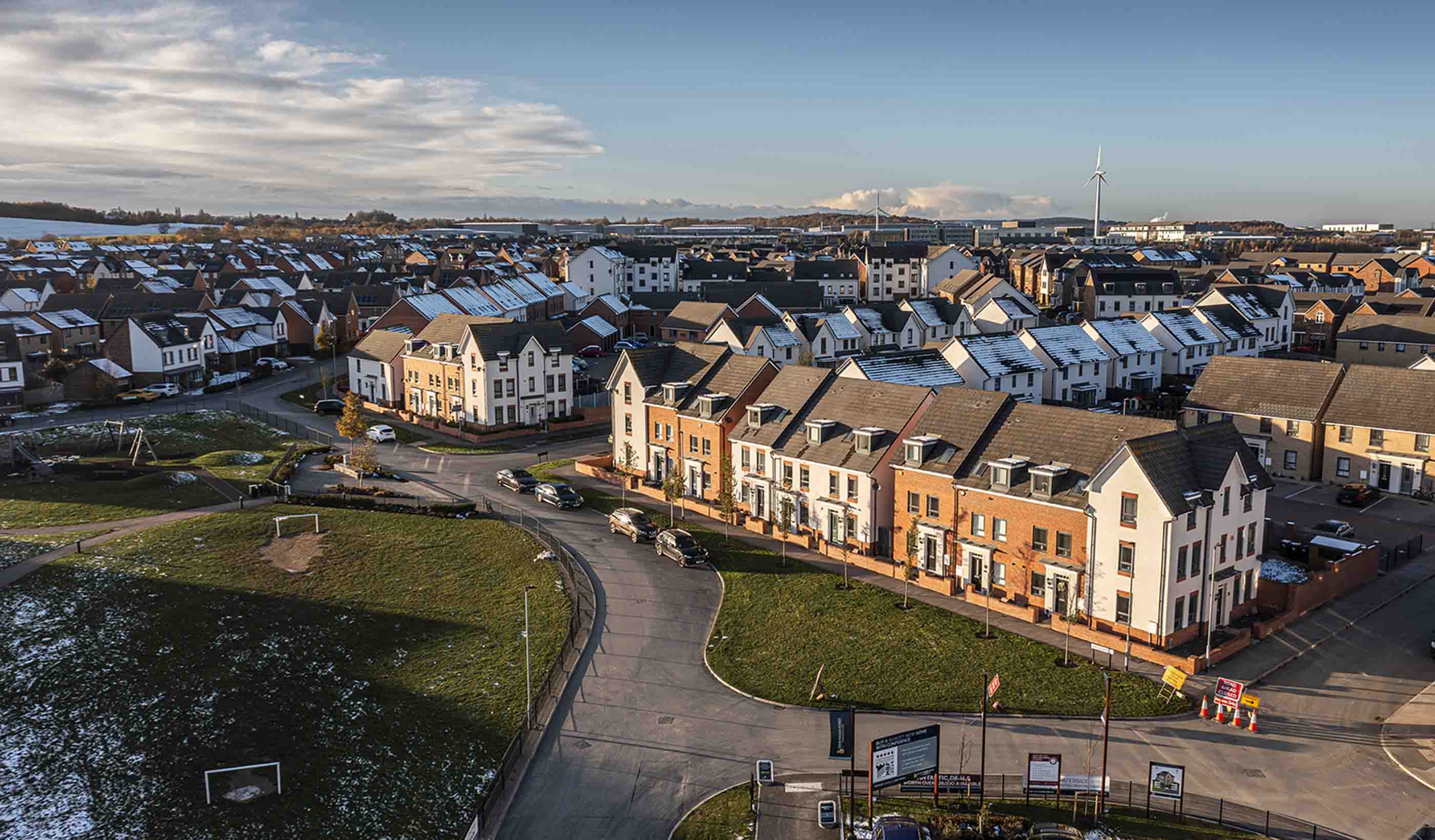
Creating new towns in England is a major factor in addressing the UK’s housing crisis. Here is Waverly, a brownfield redevelopment project that added more than 3,000 homes in the UK.
3. Prioritise financing and stewardship of new towns in England
The discussion highlighted the scale of investment required to get new towns off the ground. The panellists stressed that we need innovative financial models that recycle investment throughout the development process. What are some critical themes? Governance and stewardship. And development corporations are seen as key to providing continuity and fostering collaboration across sectors.
4. Build trust and meaningful engagement with communities
The panel agreed that authentic engagement with existing communities is non-negotiable. Storytelling and transparency are essential for building confidence with the community. And what happens when promises are delayed or broken? Negative views quickly develop.
5. Account for people-first transport and infrastructure
Looking to the future, the panel called for a proactive approach to infrastructure. It’s key to invest ahead of need, not just in response to it. They advocated for transport systems that are people-focused. They need to be seamlessly integrated with digital connectivity, so new towns are both accessible and future ready.
Reflecting on the immense opportunity before us, now is the time to change perceptions, set new standards for new towns in England and the UK, and improve the lives of tens of thousands of people. The launch of New Towns: Creating Communities, Building Trust is a call to action for our entire industry.
By bridging the gap between public perception and our ambitions, we can deliver thriving new communities that will stand the test of time.